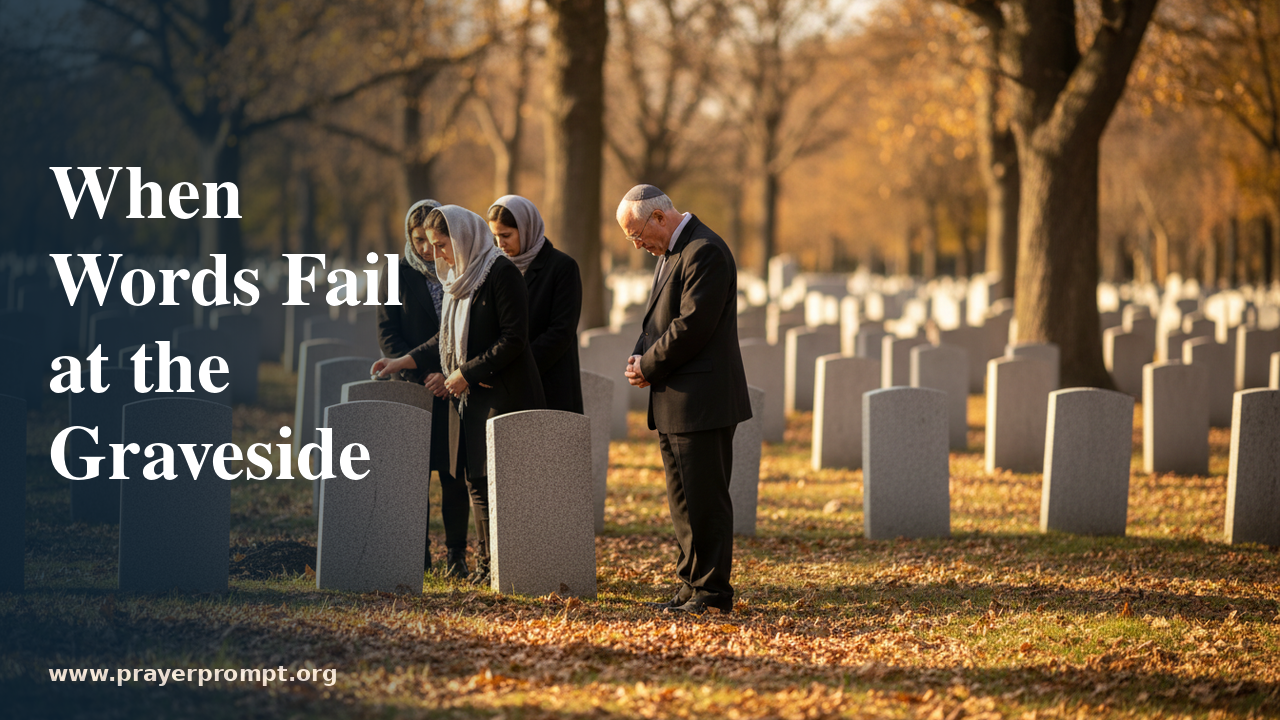
The phone call came, and now you are standing at the edge of a grief you did not expect. Perhaps a colleague’s father has died. A neighbor, a dear friend, a family member connected by marriage. You have been invited to the funeral, and you want to show up well. You want to honor the person who died and the family left behind. But you are not Jewish, and you are not sure what happens at a Jewish funeral, what the prayers mean, or how to participate respectfully.
That desire to show up with dignity is itself a form of love. And it begins with understanding.
Jewish mourning is not merely a cultural tradition. It is a deeply theological practice rooted in the belief that human life bears the image of God, that death is a solemn passage, and that the bereaved deserve a community that surrounds them with presence and prayer. The rituals and prayers that accompany a Jewish funeral carry centuries of meaning. This resource exists to help you understand them, so that you can be present in a way that truly honors both the deceased and the living.
Scripture affirms the value of mourning with those who mourn. As the Apostle Paul writes in Romans 12:15, Rejoice with those who rejoice, and weep with those who weep. Entering a Jewish funeral with genuine reverence and compassion is one of the most faithful things a person can do.
Prayer for Jewish Funeral
What Makes Jewish Funeral Prayer Distinct
Jewish funeral prayer is not designed to be a performance of grief. It is a communal act of theological honesty. Death is acknowledged without denial. God is praised even in sorrow. The deceased is honored as someone whose life carried sacred worth. Understanding these principles helps non-Jewish guests move through the service with clarity rather than confusion.
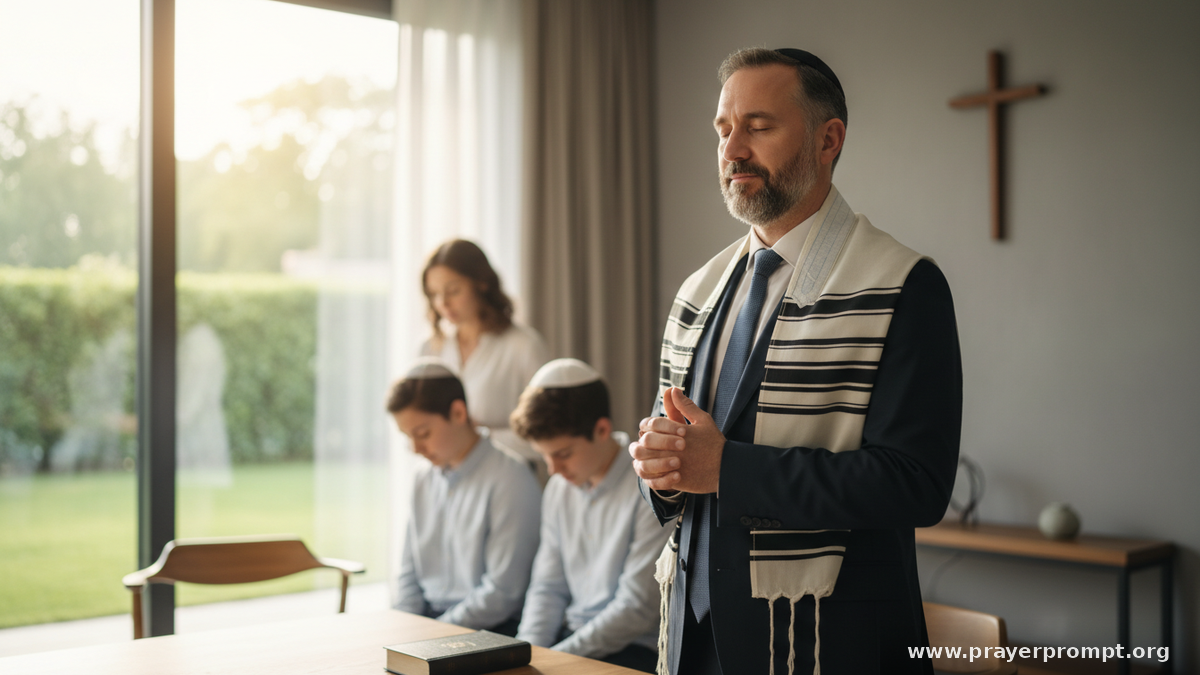
Three qualities define Jewish funeral prayer. First, it is communal. Jewish mourning is not meant to be endured alone. A minyan, a quorum of ten Jewish adults, is traditionally required for certain prayers to be recited, including Kaddish. The community’s physical presence is itself a form of prayer. Second, it is honest. Jewish prayer does not rush past grief toward easy comfort. It sits in the reality of loss while directing the heart toward God. Third, it is doxological. Even at the graveside, the prayers ultimately praise God. This is perhaps the most striking feature for those encountering Jewish funeral practice for the first time.
Jewish funerals are typically held within twenty-four hours of death when possible, reflecting the tradition of honoring the body without unnecessary delay. The service may take place at a funeral home, a synagogue, or graveside. Cremation is traditionally discouraged in Jewish law, though practice varies across Reform, Conservative, and Orthodox communities. Flowers are generally not brought to a Jewish funeral. Instead, donations to a charity in the name of the deceased are customary and deeply appreciated.
Kaddish: The Prayer of Praise in the Midst of Grief
The Kaddish is perhaps the most recognized of all Jewish mourning prayers, and also the most misunderstood by those outside the tradition. Many people expect it to be a prayer about death, a lament, or a eulogy in verse form. It is none of these things. The Kaddish is a doxology, a declaration of God’s greatness and holiness, written almost entirely in Aramaic.
The Mourner’s Kaddish, the form recited by bereaved family members, contains no mention of death at all. Its central affirmation is this: Yitgadal v’yitkadash sh’mei raba, meaning “May His great name be exalted and sanctified.” The congregation responds: “Amen. May His great name be blessed forever and ever.”
This is the theological heart of the prayer: even now, even here, even in this grief, God is holy. God is great. His name is worthy of praise. It is an act of profound faith to say this at a graveside. The Kaddish is recited by mourners during the funeral service and then daily for eleven months after the death of a parent, and on the annual anniversary of the death, known as the Yahrzeit.
Non-Jewish attendees are not expected to recite the Kaddish. Standing in respectful silence while it is spoken is entirely appropriate. If a transliteration is provided in the service program, you may follow along quietly, but there is no obligation. Your presence and stillness are themselves a form of honor.
El Malei Rachamim: God Full of Compassion
El Malei Rachamim is the Jewish memorial prayer whose name translates as “God Full of Compassion.” Unlike the Kaddish, this prayer speaks directly about the deceased, placing the soul of the departed into God’s care. It is recited at the funeral service and also at the graveside.
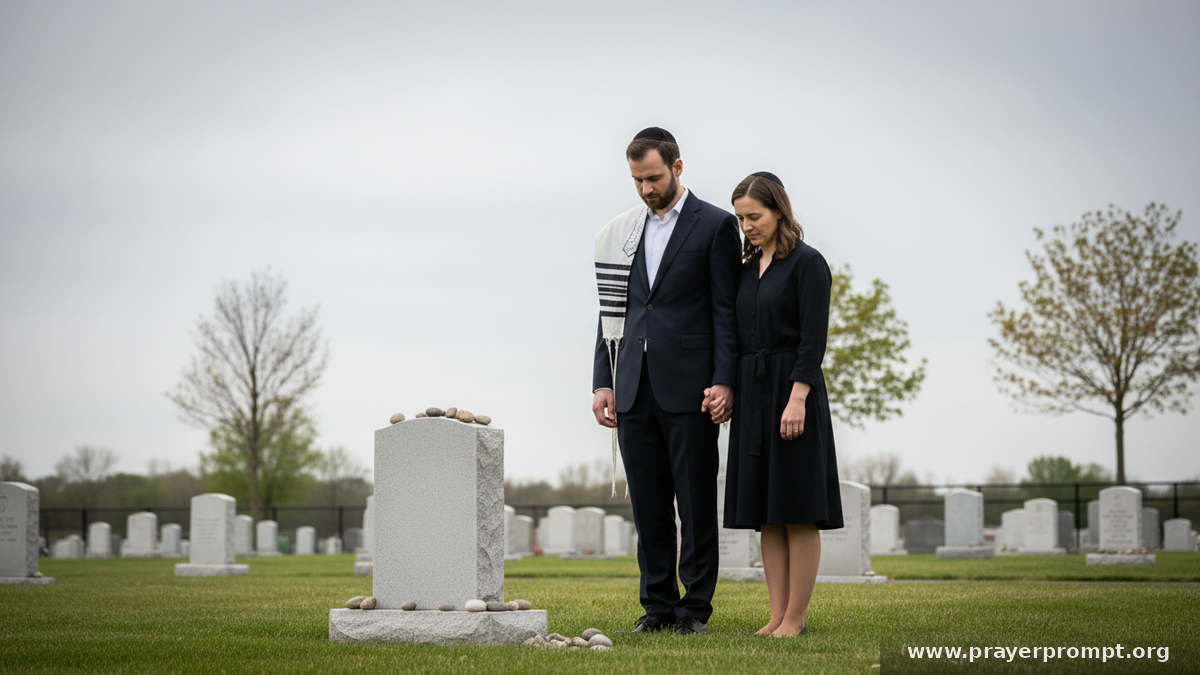
The prayer asks God to grant the soul of the deceased rest under the shelter of His wings, bound up in the bond of eternal life. It is a prayer of entrusting, a releasing of the beloved into God’s keeping. The imagery is deeply pastoral. It acknowledges that the community cannot follow the deceased any further, but God can, and God does.
El Malei Rachamim is traditionally chanted by the cantor or rabbi, not recited by the congregation. Listeners are invited simply to be present to the prayer, to let its meaning wash over the grief in the room. For a guest unfamiliar with Hebrew, this is a moment to be still and allow the prayer to speak on your behalf as well as the family’s. The longing it expresses, that the one who has died would rest in God’s peace, is a longing that transcends tradition.
The Psalm 23:4 verse Yea, though I walk through the valley of the shadow of death, I will fear no evil, for You are with me carries a kindred spirit to El Malei Rachamim. Both prayers are grounded in the conviction that God accompanies the soul, even through death, even into what lies beyond it. Psalm 23 is also frequently read at Jewish funerals across all denominations.
The Structure of a Jewish Funeral Service
Jewish funeral services are generally modest, dignified, and relatively brief. The emphasis is on honoring the deceased rather than producing an elaborate ceremony. Understanding the typical structure helps you move through the service with quiet confidence.
Most services include an opening by the rabbi, readings from Psalms, eulogies from family members or close friends, and the recitation of El Malei Rachamim and Kaddish. The Torah may be quoted. The service is not typically interactive for guests, meaning you will not be asked to participate beyond standing and sitting at the appropriate moments and responding “Amen” if you feel comfortable doing so when the congregation responds.
At the graveside, there is often a brief ceremony in which mourners and guests participate in shoveling earth onto the coffin. This act, known as kevurah, is considered one of the highest honors that can be shown to the deceased. It is an act of loving service that the person who has died cannot reciprocate. Guests are welcome to participate. The shovel is traditionally turned upside down between uses, and it is not passed from person to person directly, as it is considered inappropriate to pass grief hand to hand.
Jewish Mourning Periods: Shiva and Beyond
The funeral is the beginning, not the end, of Jewish communal mourning. Understanding the mourning periods helps you continue to support a grieving family in the days and weeks that follow.
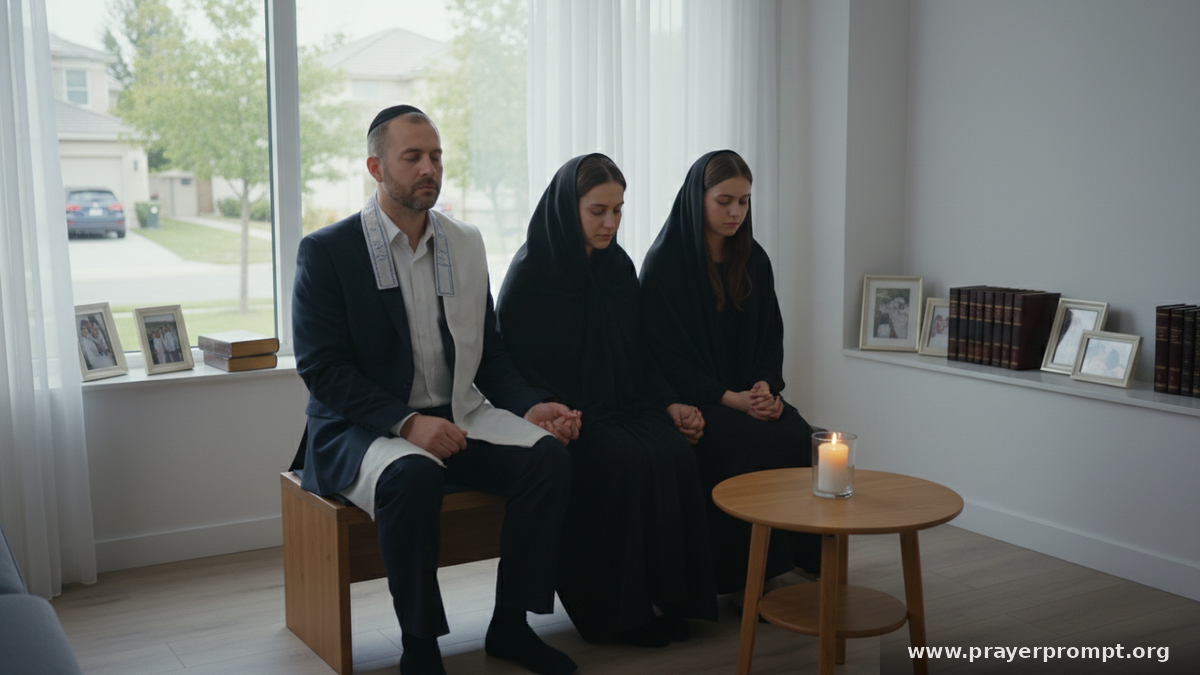
Shiva is the first and most intensive mourning period, lasting seven days following burial. During shiva, the immediate family remains at home. Mourners traditionally do not work, cook for themselves, or attend to normal daily activities. The community comes to them. Visitors bring food, sit with the bereaved, share memories of the deceased, and offer presence. If you are invited to a shiva house, you enter quietly, often without knocking, and wait to be approached by the mourner rather than approaching first. The appropriate greeting is simply: “I am so sorry for your loss” or, in Hebrew, HaMakom yenachem etchem b’toch sh’ar aveilei Tzion v’Yerushalayim, meaning “May the Almighty comfort you among the mourners of Zion and Jerusalem.”
After shiva comes Shloshim, a thirty-day mourning period during which certain restrictions continue. For those mourning a parent, a period of eleven months of saying Kaddish follows. These structured mourning periods reflect a profound pastoral wisdom: grief is not resolved in a day, and community support should not vanish after the funeral.
If you have a friend navigating loss, returning after the initial week, after thirty days, after six months, is one of the most meaningful things you can do. The Jewish mourning calendar provides a framework; your friendship can honor that rhythm. You might also find encouragement in these prayers for comfort as you seek words to offer or to pray privately for the grieving family.
How to Offer Prayer and Support Across Traditions
If you are not Jewish and you wish to pray privately for the bereaved family, you can do so freely and faithfully. You do not need to use Jewish liturgical language to pray with integrity. What matters is that your prayer is sincere, that it asks God to bring comfort to specific people in a specific grief.
Here is a simple prayer you can offer privately for a bereaved Jewish family:
Lord God, Creator of all life, I bring before You the family of [Name] in their grief. You know the weight of what they carry today. Grant them the comfort that only You can give, peace that holds them when words fail, rest for the soul of their beloved, and the steady presence of community around them in the days ahead. May Your name be honored even in this sorrow, and may those who mourn find, in Your faithfulness, the strength to rise again. Amen.
Many people find it helpful to simply pray for the family by name, asking God to surround them with peace, to grant rest to the soul of the person who has died, and to raise up a strong community of support around them. Prayers that acknowledge the goodness and faithfulness of God, even in loss, echo the spirit of the Kaddish without requiring you to use its language. You can find a gentle starting point with this reflection on finding comfort in prayer, or offer the bereaved family access to a prayer for comfort in their own private moments.
What you should avoid is offering theological commentary, sharing opinions on what happens after death, or attempting to convert or redirect someone’s faith during a period of acute grief. Your role is not to instruct. It is to accompany. The most faithful gift you can bring is your presence, your willingness to sit in the grief, and your genuine care for the people in front of you.
For those supporting a Jewish friend through prolonged grief in the weeks after the funeral, quiet and consistent presence matters more than words. Bringing a meal, offering to help with practical tasks, or simply checking in by message, all of these are forms of prayer made visible. You might also draw on prayers for healing from heartbreak as a personal resource during your own grief of accompanying another through loss.
Practical Guidance for Non-Jewish Guests at a Jewish Funeral
Attending a Jewish funeral for the first time does not need to feel overwhelming. A few simple guidelines will help you move through the service with respect and ease.
- Dress modestly and in dark or muted colors. Men may be asked to wear a kippah (head covering); these are typically available at the entrance and you should wear one if offered.
- Arrive quietly and find a seat without drawing attention. Jewish funerals are not typically occasions for pre-service socializing.
- Do not bring flowers. A charitable donation in the name of the deceased, made to a cause the family designates, is the appropriate gesture.
- Follow the lead of those around you for sitting and standing. You will not be expected to recite Hebrew prayers, but standing respectfully during them is appropriate.
- At the graveside, you may participate in the shoveling of earth if you feel comfortable. This is considered an honor, not an obligation.
- Turn off your phone. Jewish funeral services treat the silence of the space as sacred.
- After the service, if you attend the shiva, do not wait for the mourner to approach you. Sit quietly and let them come to you in their own time.
- The greeting “I’m sorry for your loss” is always appropriate. Long speeches or attempts to offer theological comfort are generally not helpful in the immediate hours after burial.
If you are walking through a long season of sitting with a grieving friend, you may find yourself needing comfort and rest as well. These peaceful nighttime prayers can help you release the weight of another’s grief at the end of each day, returning it to God’s keeping before you sleep.
When Illness Precedes Death: Praying During a Jewish Family’s Crisis
Sometimes the need for understanding and prayer begins before the funeral, when a Jewish friend or neighbor is seriously ill or dying. In Jewish tradition, a prayer known as the Mi Sheberach is recited in the synagogue for healing. Its name means “May the One who blessed,” and it asks God for healing of body and soul.
As someone supporting a Jewish family during illness, you can pray privately for the person’s healing and peace without needing to use specific liturgical language. If you are looking for a resource for this season of waiting and hoping, this prayer for the sick may offer language that carries your heart toward God on their behalf.
The deepest act of support in any tradition is showing up. Understanding how Jewish families pray in grief, what the prayers mean, what the mourning rituals ask of a community, equips you to be genuinely present rather than distantly respectful. You do not need to convert anyone or have all the answers. You only need to come, and to stay.
Want to go deeper or get more support? Create a free account to chat with Haven — your personal companion for guidance, resources, and whatever is on your heart.
Pray with us every morning.
A scripture-fused prayer in your inbox at 5:00 AM, every day. Free.